

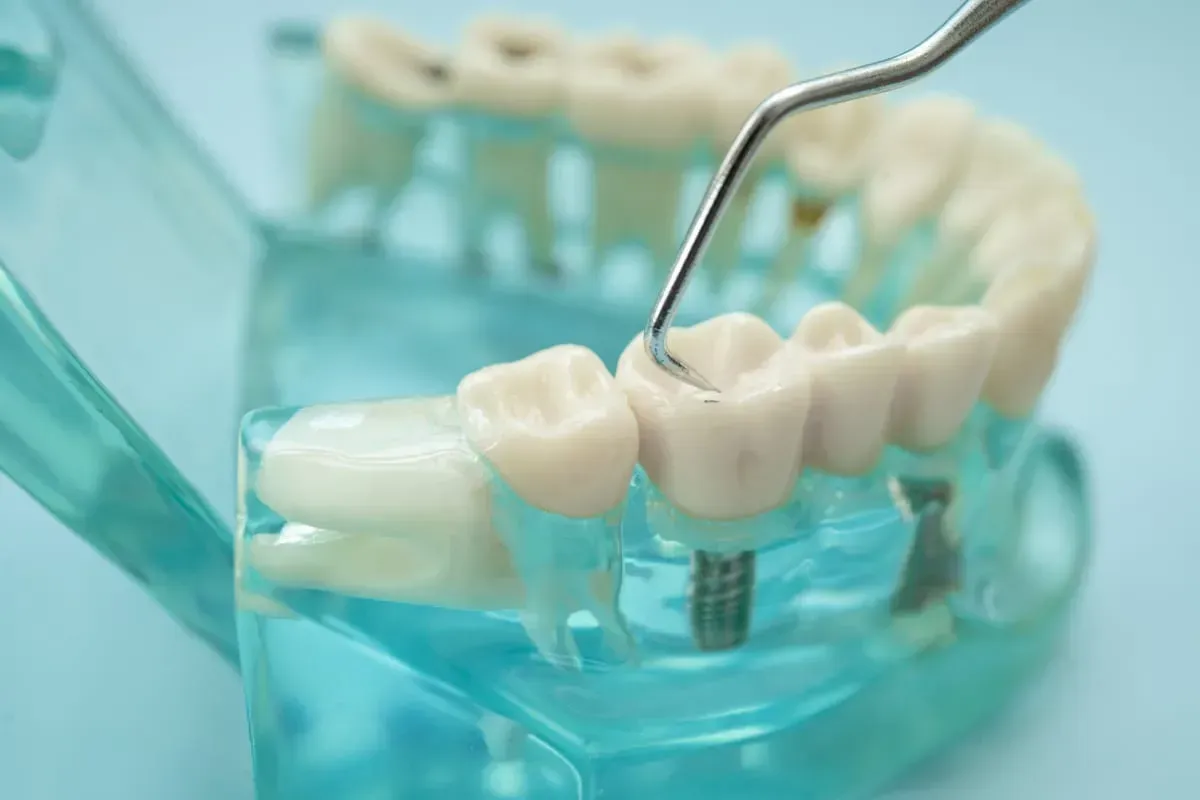
Damaged, worn, or missing teeth can affect more than the appearance of your smile. They can also make it more difficult to chew comfortably, speak clearly, and maintain good oral health
Restorative dentistry focuses on repairing damaged teeth and replacing missing teeth to restore function, comfort, and appearance.
At Newark Smiles Dental, we take a personalized approach to restorative care. We begin with a thorough examination, explain what we find, and discuss the treatment options that may be appropriate for your individual needs.
What Is Restorative Dentistry?
Restorative dentistry includes treatments designed to repair teeth that have been affected by decay, injury, wear, or infection, as well as treatments that replace missing teeth.
Common restorative treatments include:
- Tooth-colored fillings
- Dental crowns
- Inlays and onlays
- Root canal treatment
- Dental bridges
- Dental implants
The appropriate treatment depends on the condition of your teeth, your overall oral health, and your individual goals.
Our priority is to preserve healthy natural tooth structure whenever possible while restoring comfortable and reliable function.
When Might You Need Restorative Treatment?
Dental problems do not always cause noticeable symptoms in their early stages. Regular dental examinations can help identify problems before they become more extensive.
You may benefit from a restorative evaluation if you experience:
- Tooth pain or sensitivity
- A cracked or chipped tooth
- Pain when biting or chewing
- A filling that is damaged, loose, or worn
- A tooth that has significant decay
- A missing tooth or several missing teeth
- Swelling or other signs of infection
- Difficulty chewing comfortably
If you notice a change in your teeth or oral health, it's a good idea to have it evaluated rather than waiting for symptoms to become more severe.
Restorative Treatment Options
Restorative dentistry does far more than repair a chipped tooth or fill a cavity. Left untreated, dental damage tends to compound: a small crack becomes a fracture, a shallow cavity reaches the nerve, and a single missing tooth leads to bone loss and shifting of the surrounding teeth. Addressing problems promptly protects your overall oral health and often preserves teeth that might otherwise need to be extracted.
Beyond the clinical benefits, restored teeth also make everyday life easier. Chewing without pain, speaking clearly, and smiling with confidence all depend on a mouth that is functioning the way it should. We build every restoration with both structure and appearance in mind.
- Tooth-Colored Fillings: Fillings are commonly used to repair teeth affected by cavities or minor damage. Tooth-colored composite materials can be matched to the natural shade of your teeth, providing a restoration that blends naturally with your smile.
- Dental Crowns: A crown can help restore a tooth that has been significantly weakened by decay, a fracture, extensive dental work, or root canal treatment. A custom crown covers the visible portion of the tooth and is designed to restore its shape, function, and appearance.
- Inlays and Onlays: Inlays and onlays may be appropriate when a tooth needs more support than a traditional filling can provide but does not require a full crown. These restorations are custom-made to fit the affected tooth and can help preserve healthy tooth structure.
- Root Canal Treatment: When decay or injury reaches the inner pulp of a tooth, root canal treatment may be recommended. During a root canal, the affected pulp is removed, the inside of the tooth is carefully cleaned and sealed, and the tooth is restored to help protect it and return it to normal function. Root canal treatment can often allow a natural tooth to be preserved rather than removed.
- Dental Bridges: A dental bridge can replace one or more missing teeth by using neighboring teeth or other supporting structures to hold the replacement teeth in place. Bridges can restore chewing function and help maintain the appearance and alignment of your smile.
- Dental Implants: Dental implants are designed to replace missing teeth and their roots. An implant consists of a small post placed in the jawbone, which can support a custom restoration such as a crown. Dental implants can provide a stable, natural-looking option for replacing missing teeth when a patient is an appropriate candidate
- Partial and Full Dentures: Dentures can replace several missing teeth or, in the case of full dentures, an entire arch of teeth. Today's dentures can be designed to provide a comfortable fit and a natural-looking appearance while helping restore chewing and speaking function.
Choosing the Right Treatment
There is not one restorative treatment that is right for every patient.
The best approach depends on factors such as:
- The amount of healthy tooth structure remaining
- The location and extent of the damage
- Your gum and overall oral health
- Your bite and chewing needs
- Whether teeth are missing
- Your personal goals and preferences
- Your treatment timeline and budget
During your visit, we'll review your examination and any necessary imaging with you. We'll explain the recommended treatment and discuss appropriate alternatives so you can make an informed decision about your care.
What Can You Expect During Your Visit?
Examination and Diagnosis
We begin with a thorough examination and review of your dental history and concerns. Digital X-rays or other diagnostic imaging may be recommended when appropriate
Treatment Planning
Once we understand your needs, we'll explain our findings and discuss your treatment options, including the expected process, timeline, and cost.
Comfortable Treatment
When treatment is needed, we use appropriate local anesthesia and techniques designed to help keep you comfortable throughout your appointment.
Restoring Your Tooth or Smile
Depending on your treatment, your restoration may be completed in one visit or may require additional appointments for a custom crown, bridge, implant restoration, or denture.
Follow-Up and Maintenance
We'll explain how to care for your restoration and let you know when follow-up appointments are recommended
Protecting Your Restored Smile
Restorative treatment is only one part of maintaining good oral health. Proper daily care and regular dental visits are important for helping your teeth and restorations remain healthy.
We recommend:
- Brushing twice a day with fluoride toothpaste
- Tooth-colored, durable materials:Cleaning between your teeth daily
- Maintaining regular dental examinations and professional cleanings
- Avoiding chewing on hard objects such as ice
- Avoiding using your teeth to open packages
- Wearing a nightguard if recommended for teeth grinding or clenching
- Contacting your dentist if you notice pain, sensitivity, a loose restoration, or another change
With proper care and regular professional monitoring, many restorations can provide years of service.
Key Takeaways
- • Restorative dentistry repairs damaged teeth and replaces missing ones, prioritizing function alongside a natural appearance.
- • Fillings and crowns address decay and structural damage, with the right choice depending on how much of the tooth remains.
- • Implants, bridges, and dentures each replace missing teeth differently, suited to different budgets and clinical situations.
- • A root canal saves an infected tooth and relieves pain rather than causing it, usually followed by a protective crown.
- • Long-term success depends on consistent daily care and regular checkups, not just the initial procedure itself.
Frequently Asked Questions
How do I know whether I need a filling or a crown?
The answer depends primarily on the amount of healthy tooth structure that remains and the extent of the damage. A filling may be appropriate for a smaller area of decay, while a crown may be recommended when a tooth needs additional structural support. Your dentist can determine the appropriate option after an examination.
Does restorative dentistry hurt?
Many restorative procedures are performed using local anesthesia to keep you comfortable. Some treatments may result in temporary sensitivity or soreness afterward. Your dentist will explain what you can expect based on your specific treatment.
Can a damaged tooth be saved?
In many situations, a damaged tooth can be restored and preserved. However, the appropriate treatment depends on the extent of the damage, the condition of the tooth, and your overall oral health.
Are dental implants right for everyone?
Dental implants can be an excellent option for many patients, but candidacy depends on factors such as bone structure, gum health, overall health, and other individual considerations. An examination and appropriate imaging can help determine whether implants may be suitable for you.
How long do dental restorations last?
The lifespan of a restoration varies depending on the type of restoration, the tooth involved, your oral hygiene, your bite, and habits such as grinding or clenching. Regular dental visits allow your dentist to monitor your restorations and identify potential problems early.
Take the Next Step Toward a Healthier Smile
If you have a damaged, weakened, or missing tooth, you don't have to navigate your treatment options alone.
At Newark Smiles Dental, we take the time to understand your concerns, explain your options clearly, and develop a treatment plan based on your individual needs.
Our goal is to restore your oral health, function, and confidence while providing care that feels personal and comfortable.
If you have questions about restorative dentistry or would like to schedule an evaluation, contact Newark Smiles Dental today