

If you've ever covered your mouth while laughing because of a chipped tooth, a stubborn stain, or a gap you've never liked, you're not alone. Porcelain veneers have become one of the most requested cosmetic treatments in dentistry, and for good reason: they address several smile concerns at once with a result that looks like your own teeth, only better.
At Newark Smiles Dental, we see patients every week who want a straighter, brighter, more even smile but aren't interested in years of orthodontic treatment or a mouth full of dramatic changes. Veneers often sit right at that intersection - a conservative, customizable solution that can be finished in just a couple of visits.
This article walks through how porcelain veneers actually work, who tends to be a good candidate, what the process looks like from start to finish, and how to care for them once they're on your teeth. Whether you're actively researching treatment or just curious about your options, you'll find straightforward, practical information here.
What Are Porcelain Veneers, Exactly?
A porcelain veneer is a thin shell, usually about half a millimeter to a millimeter thick, that's bonded directly to the front surface of a tooth. Think of it less as a cap over the whole tooth and more as a custom-made facing that covers only what's visible when you smile. The porcelain is color-matched and shaped to your other teeth, or to the exact look you and your dentist design together, so the final result blends in rather than standing out.
Porcelain is popular for this purpose because it mimics the way natural enamel reflects light. Unlike composite resin, which can look slightly flat or opaque over time, porcelain has a translucent quality that gives teeth a lifelike depth. It's also highly stain-resistant, which matters if you're someone who enjoys coffee, tea, or red wine and wants a smile that won't dull after a few months.
Veneers are typically used to correct a combination of issues rather than just one. A patient might come to us with a chipped front tooth, slight discoloration on the tooth next to it, and a small gap between the two - all of which can often be addressed with a coordinated set of veneers rather than three separate treatments.
Am I a Good Candidate for Veneers?
Veneers work best on teeth that are structurally healthy but cosmetically imperfect. If your main concerns are about color, shape, minor spacing, or small chips, you're likely a strong candidate. The treatment is popular because it can address several of these issues in one coordinated plan, which is part of why so many patients ask about it after years of being unhappy with how their front teeth look in photos.
That said, veneers aren't the right fit for every situation. Active gum disease, significant tooth decay, or teeth that have lost a lot of structural integrity usually need to be treated first, since veneers are bonded to the existing tooth and depend on a stable foundation underneath. Similarly, patients with a habit of significant teeth grinding may need a nightguard alongside their veneers to protect the investment, since excessive pressure can chip porcelain over time.
- Discolored teeth that don't respond to whitening: Some staining, particularly from certain medications or old fillings, sits deep in the tooth and resists bleaching treatments, but porcelain can mask it completely.
- Chipped or worn edges: Front teeth that have thinned or chipped from years of normal wear can be rebuilt to look full and even again.
- Minor gaps or slightly crooked teeth: Small spacing irregularities that don't require full orthodontics can often be closed cosmetically.
- Uneven tooth shapes or sizes: If one or two teeth look noticeably different from the rest, veneers can bring them into harmony with your smile.
What Happens During the Veneer Process?
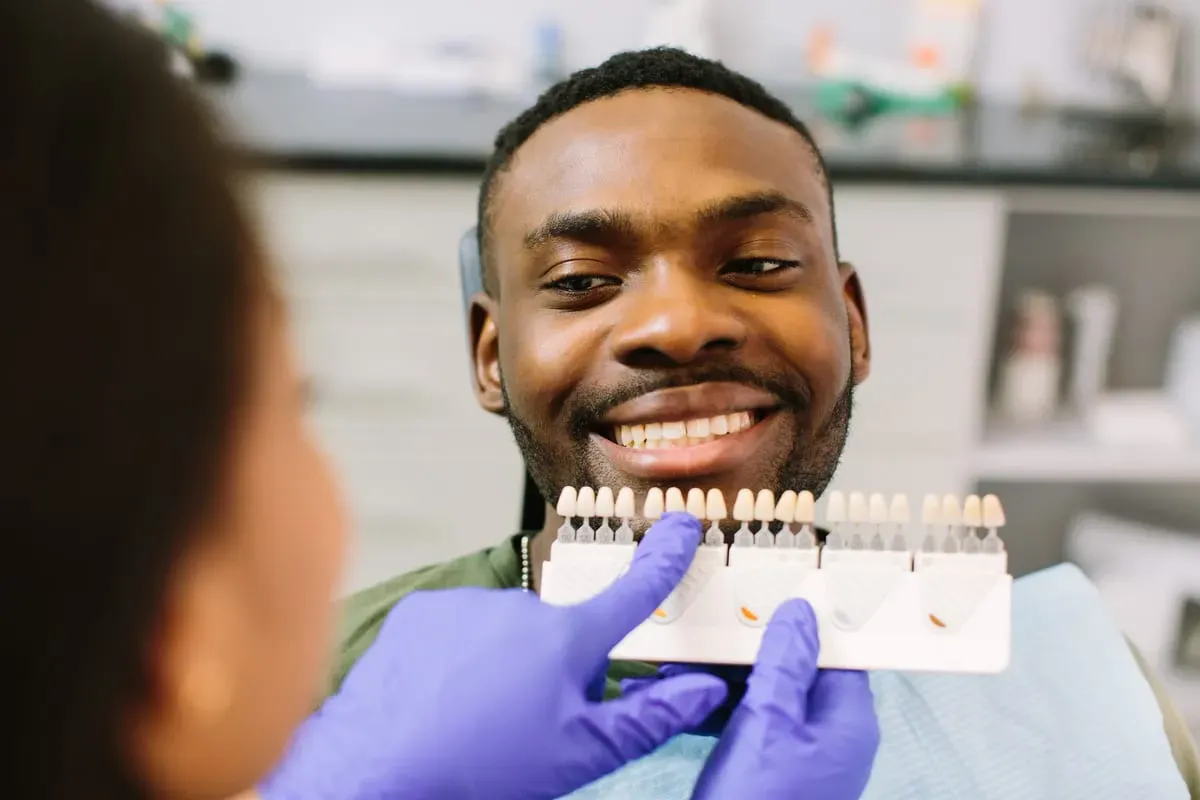
The process almost always starts with a consultation. We'll look closely at your teeth and gums, take photos and digital impressions, and talk through exactly what you want to change - whether that's a brighter color, a straighter line across your front teeth, or simply fixing one tooth that's bothered you for years. This is also when we discuss shade, shape, and the overall look you're going for, sometimes using a mock-up so you can preview the result before any permanent change is made.
Once the plan is set, a small amount of enamel is gently removed from the front of each tooth that will receive a veneer. This step is necessary so the veneer sits flush with your surrounding teeth rather than looking bulky, but the amount removed is minimal, often less than a millimeter. From there, we take precise impressions that are sent to a dental lab, where your veneers are custom-crafted to match the shade, translucency, and shape we've agreed on.
While the final veneers are being made, you'll typically wear temporary ones so your teeth aren't left exposed or sensitive, and so you can get a feel for the new shape in daily life. When the permanent veneers arrive, we check the fit and color carefully before bonding them into place with a strong dental adhesive, then make small adjustments to the bite so everything feels comfortable and natural when you chew or speak.
How Long Do Porcelain Veneers Usually Last?
With good care, porcelain veneers commonly last between 10 and 15 years, and many patients see them hold up even longer. The lifespan depends heavily on daily habits: how well you keep up with brushing and flossing, whether you wear a nightguard if you grind your teeth, and whether you use your front teeth to do things they weren't designed for, like opening packages or biting fingernails.
Unlike natural enamel, porcelain doesn't decay, but the tooth underneath the veneer still can if it isn't cleaned properly. That's why ongoing dental checkups remain important even after your veneers are placed. We check the margins where the veneer meets the natural tooth, make sure nothing is lifting or wearing unevenly, and catch small issues before they become bigger ones.
If a veneer does eventually chip or come loose, it can usually be repaired or replaced individually rather than requiring you to redo the whole set, which is one of the practical advantages of this treatment over more invasive alternatives.
Caring for Your Veneers Day to Day
Taking care of veneers is a lot simpler than people expect. Brush twice a day with a non-abrasive toothpaste, floss daily, and keep your regular dental cleanings on schedule, just as you would for natural teeth. Porcelain is quite resistant to staining, but the cement line at the edge of the veneer and your natural teeth around it can still pick up discoloration, so good hygiene habits still matter.
A few small adjustments can go a long way in protecting your investment. If you grind your teeth at night, even occasionally, a custom nightguard reduces the pressure placed on the porcelain and significantly lowers the chance of a chip. If you play contact sports, a properly fitted mouthguard is worth discussing with us as well.
It's also worth being mindful of very hard foods, like ice or hard candy, which can chip veneers the same way they can chip natural teeth. Beyond that, there's very little special maintenance required. Most patients tell us that once the veneers are in, caring for them simply becomes part of their normal routine.
Veneers Compared to Other Cosmetic Options
Patients often ask how veneers compare to teeth whitening, bonding, or orthodontics, since all four fall under the general umbrella of cosmetic dentistry. Whitening is the least invasive option and works well for teeth that are simply dull or stained, but it won't change the shape of a tooth or close a gap. Bonding, which uses tooth-colored composite resin applied directly to the tooth, is more affordable and reversible but tends to stain more easily and isn't as durable as porcelain over the long run.
Orthodontic treatment, whether traditional braces or clear aligners, is the right choice when the primary concern is alignment or bite function across the whole mouth. But if your goal is specifically about the appearance of your front teeth - color, shape, minor spacing, small chips - veneers often deliver a more dramatic and immediate change without the months or years that orthodontics require.
We frequently combine approaches, too. Some patients opt to whiten their natural teeth first, then use veneers on one or two teeth that didn't respond to whitening, so the whole smile ends up matching evenly. There isn't a single right answer for everyone, which is why we spend real time during consultations understanding what you want your smile to look like before recommending a path forward.
Key Takeaways
- Porcelain veneers are thin, custom shells bonded to the front of teeth to correct color, shape, and minor spacing issues.
- Good candidates have healthy teeth and gums with mainly cosmetic, rather than structural, concerns.
- The process generally takes two visits: one for preparation and impressions, one for final bonding.
- With proper care, veneers commonly last 10 to 15 years or longer.
- Daily hygiene and regular dental visits remain essential, since the natural tooth beneath the veneer can still decay.
Frequently Asked Questions
Does getting porcelain veneers hurt?
Most patients feel little to no discomfort. We use local anesthesia during the enamel preparation step, and any sensitivity afterward is usually mild and temporary, similar to what you'd feel after a routine filling.
Can veneers be whitened once they're placed?
No, porcelain doesn't respond to whitening treatments the way natural enamel does. This is actually a good reason to whiten your natural teeth to your desired shade before veneers are made, so the color is matched exactly where you want it.
Is the enamel removal permanent?
Yes, the small amount of enamel removed during preparation does not grow back, which means a tooth that has received a veneer will likely need some form of veneer or restoration going forward. This is one reason we talk through the decision carefully before moving forward with treatment.
How many veneers do most people get?
It varies widely. Some patients only need one veneer to fix a single chipped or discolored tooth, while others choose a full set of six to eight across their upper front teeth for a more uniform, symmetrical smile. We'll recommend what makes sense based on your specific goals.
Will my veneers look fake or unnaturally perfect?
Not if they're planned well. We design veneers around your facial features, lip line, and natural tooth proportions, and porcelain's translucency helps it catch light the way real enamel does. The goal is always a smile that looks like an improved version of your own, not a generic set of teeth.
Finding the Right Fit for Your Smile
Porcelain veneers offer a rare combination in cosmetic dentistry: a treatment that's minimally invasive relative to the change it produces, with results that can last well over a decade when cared for properly. For patients who've felt self-conscious about chipped, discolored, or uneven front teeth, veneers often provide the confidence boost they've been looking for without years of orthodontic treatment or repeated whitening sessions that never quite get the color even.
The best way to know whether veneers make sense for you is a conversation with a dentist who can look at your teeth, understand what you want to change, and walk you through realistic options. At Newark Smiles Dental, we take that conversation seriously, because a smile makeover works best when it's planned around your actual teeth, your bite, and the look you're hoping to achieve.